
CaseVane blog
Notes on refusals, privacy and checked AI drafting.
Practical articles for licensed Canadian immigration professionals, and plain explanations of how CaseVane handles your clients' files.
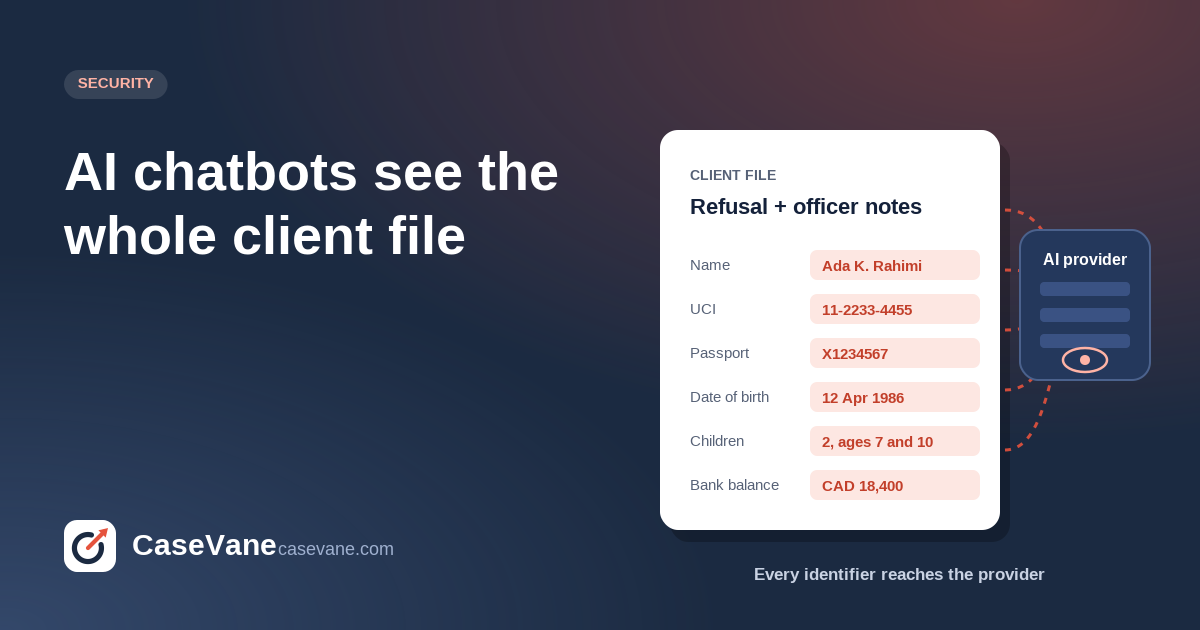
Every AI chatbot reads the whole file: the confidentiality problem with legal AI
Upload a client file to a general AI assistant and the provider receives every name, number and family detail in it, whatever you asked. Privacy settings act afterwards. What that means for lawyers and consultants, and what a safer design looks like.
 Security
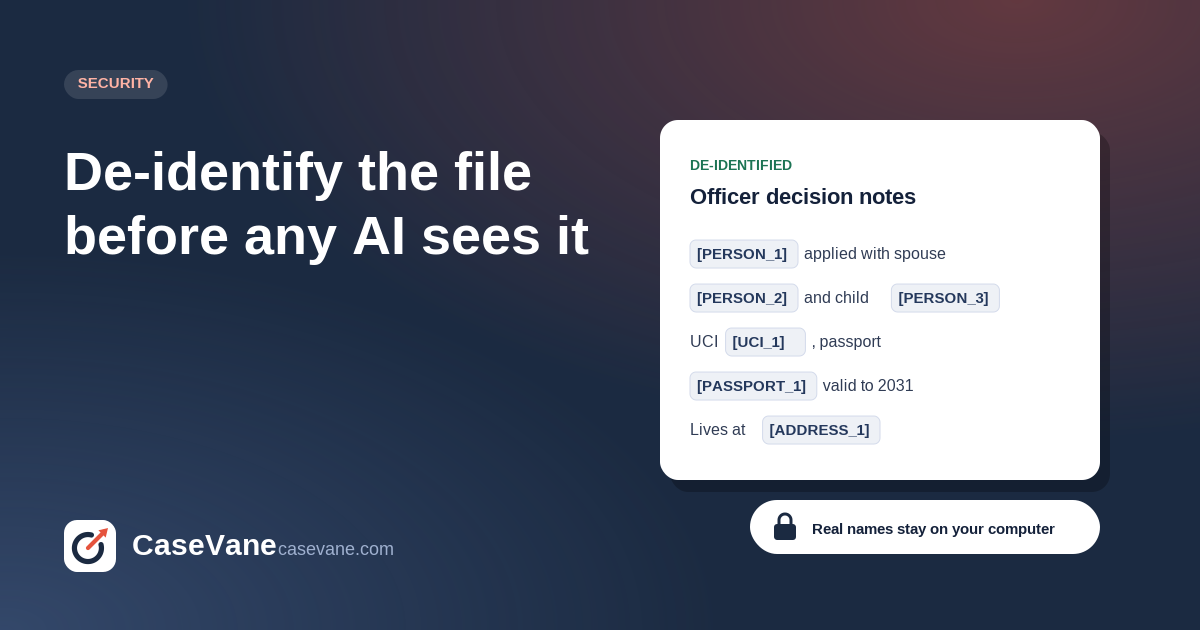
How to de-identify an immigration file before any AI sees it
A four-step method for immigration professionals: replace direct identifiers with consistent placeholders, judge indirect ones, avoid PDF traps, and review the outgoing text while keeping the key on your own computer.
 Technology
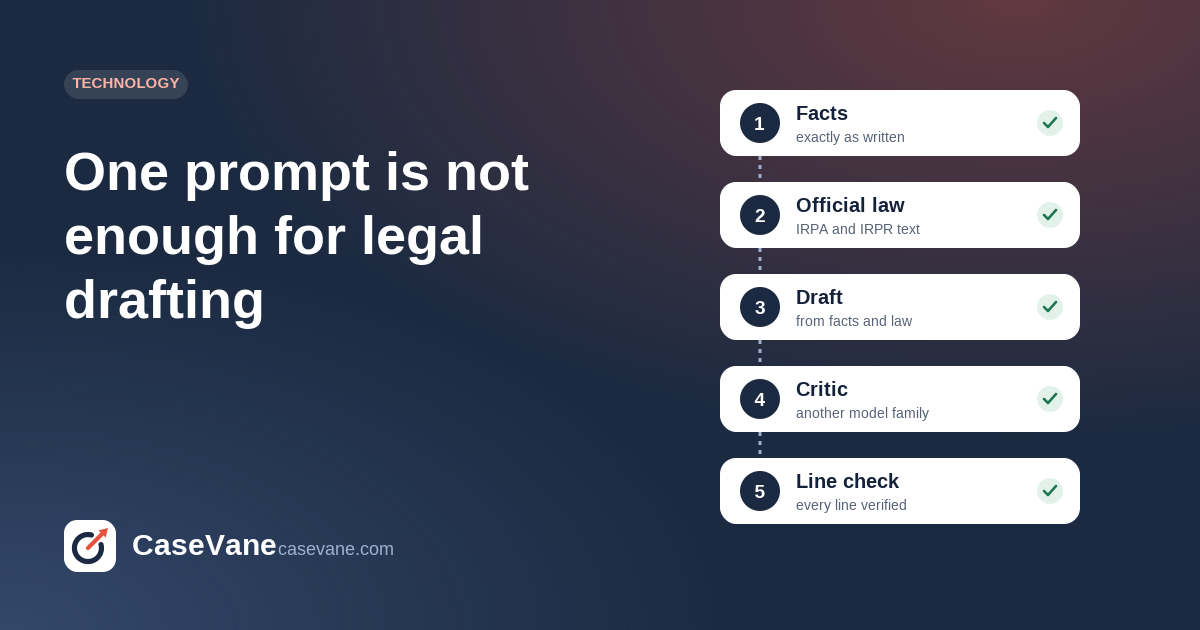
Why one AI prompt is not enough: specialized chains for legal drafting
Single-prompt AI drafting invents citations, quotes law from memory and hides gaps. Six principles of a specialised chain (extraction, official sources, an independent critic, line checks, code guards and visible uncertainty) and what they cannot do.
 Practice
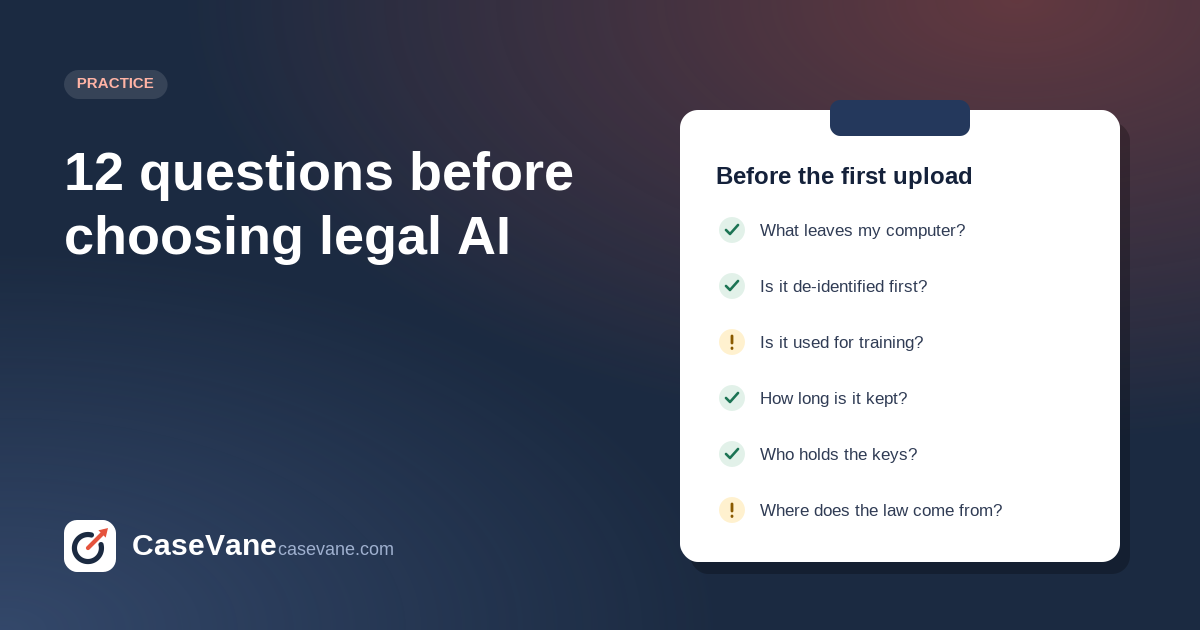
12 questions to ask before you put client files into any legal AI tool
Before the first upload, ask where the data goes, who can read it, how long it stays and how the output is checked. Twelve questions with what a good answer looks like, and CaseVane's own answers, limits included.
 Security
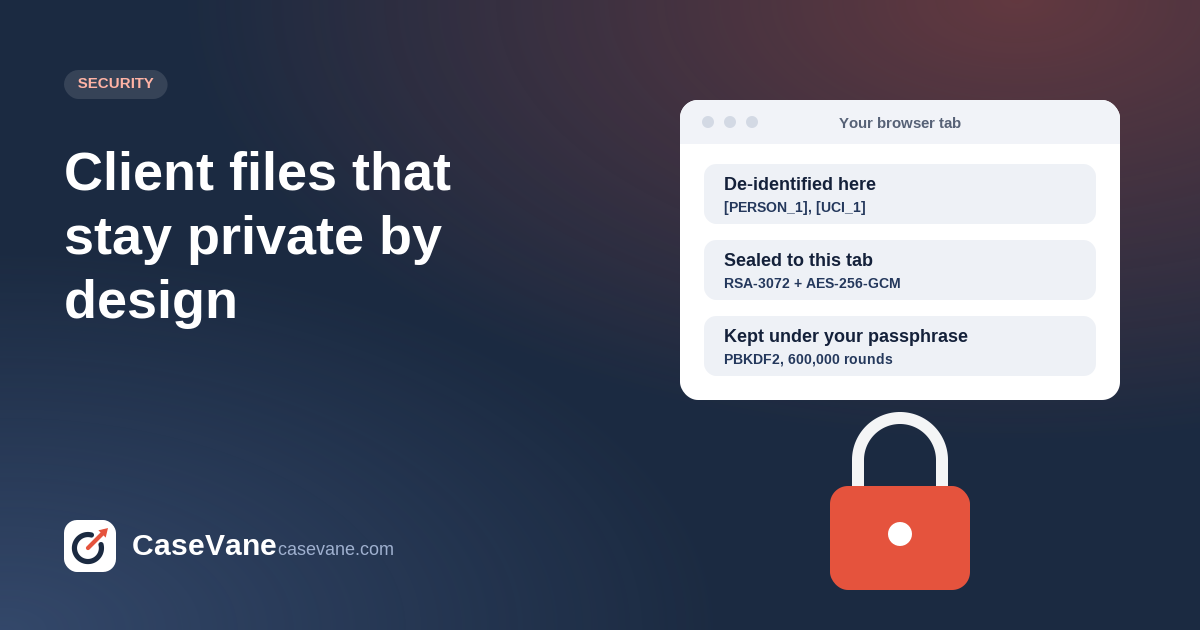
How CaseVane keeps client files private: browser de-identification, sealed drafts and a passphrase vault
The three layers that keep a client's identity on the professional's computer: names and numbers are replaced in the browser, the finished draft is encrypted to the browser tab, and long-term copies are locked under a passphrase we never see.
 Technology
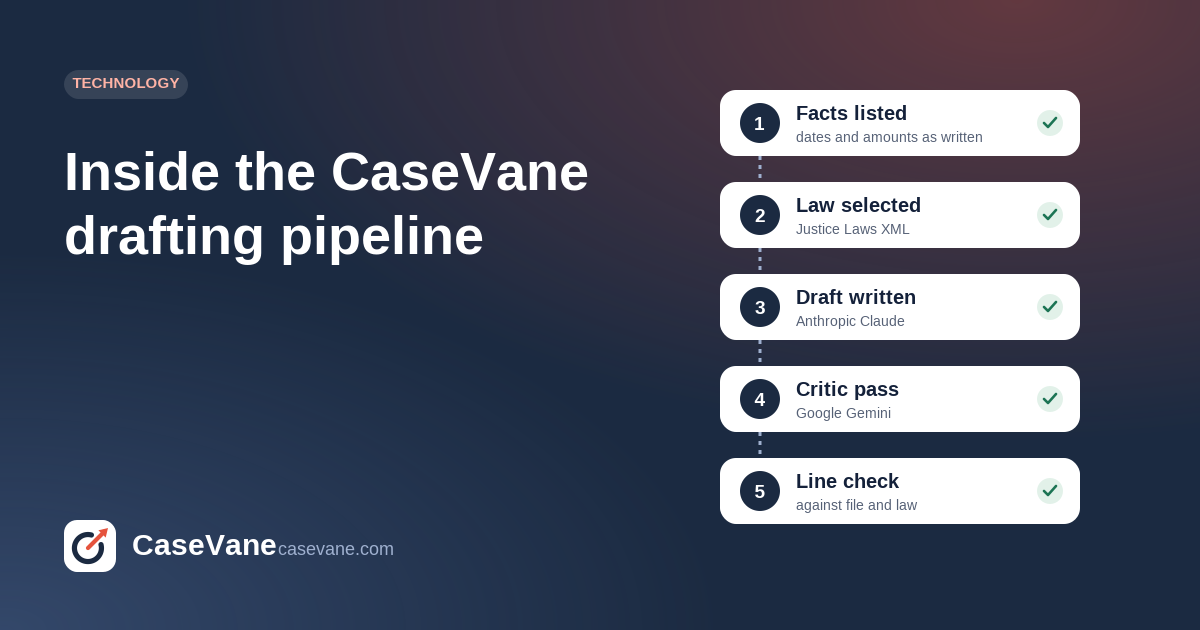
Inside the CaseVane pipeline: how an IRCC refusal becomes a checked first draft
Five passes turn a refusal letter and the officer's notes into a working draft: facts extracted, IRPA and IRPR sections selected from the official text, a draft written, a critic from a different model family, and a line-by-line check.
 Practice
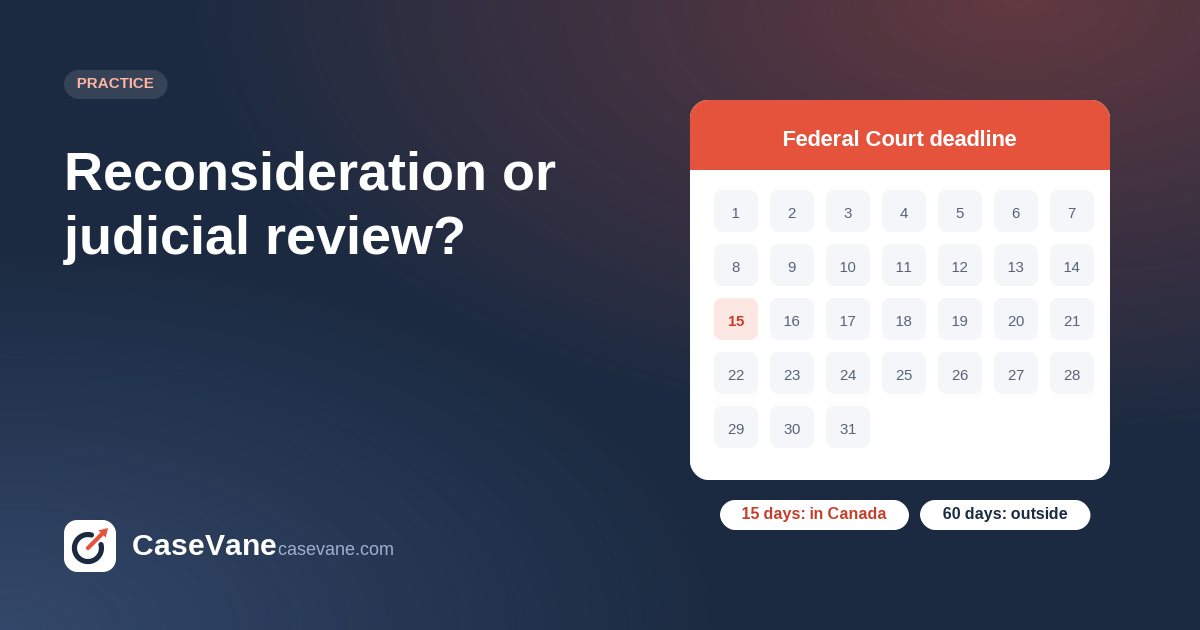
Reconsideration request or judicial review after an IRCC refusal: how the deadlines interact
A reconsideration request asks the original decision maker to look again; leave for judicial review must be sought within 15 or 60 days. A reconsideration request does not stop that clock.
 Practice
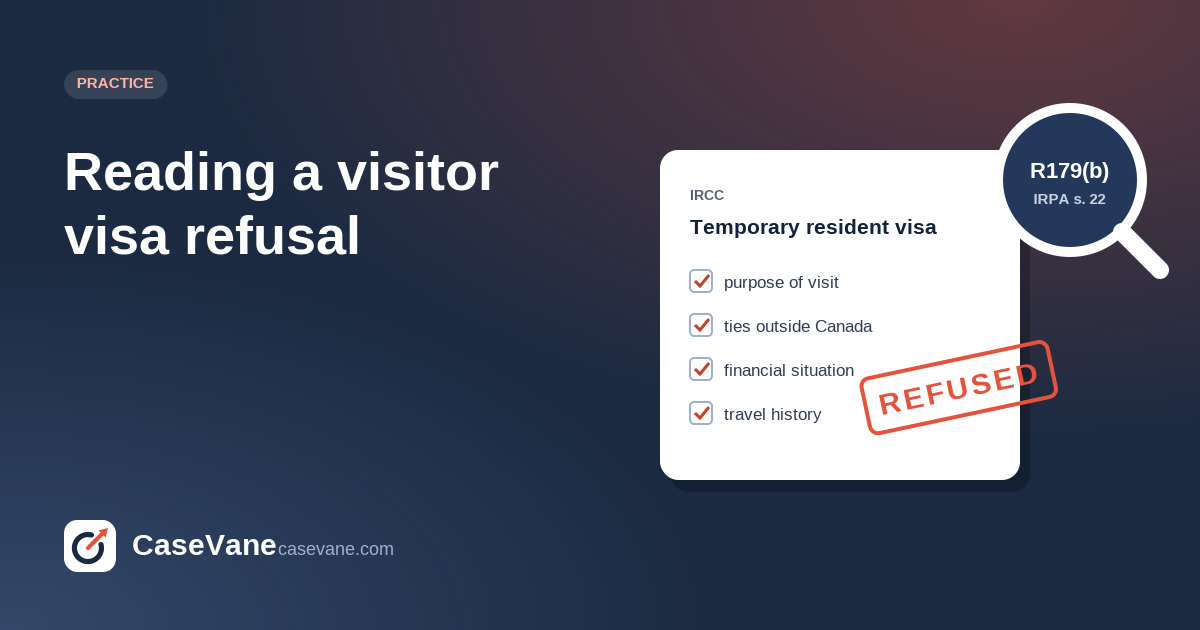
Reading a visitor visa refusal: R179, section 22 and the officer's decision notes
Most visitor visa refusals turn on one question: is the officer satisfied the applicant will leave at the end of the stay? How to map each reason in the letter and the notes to the evidence on file.
 Practice
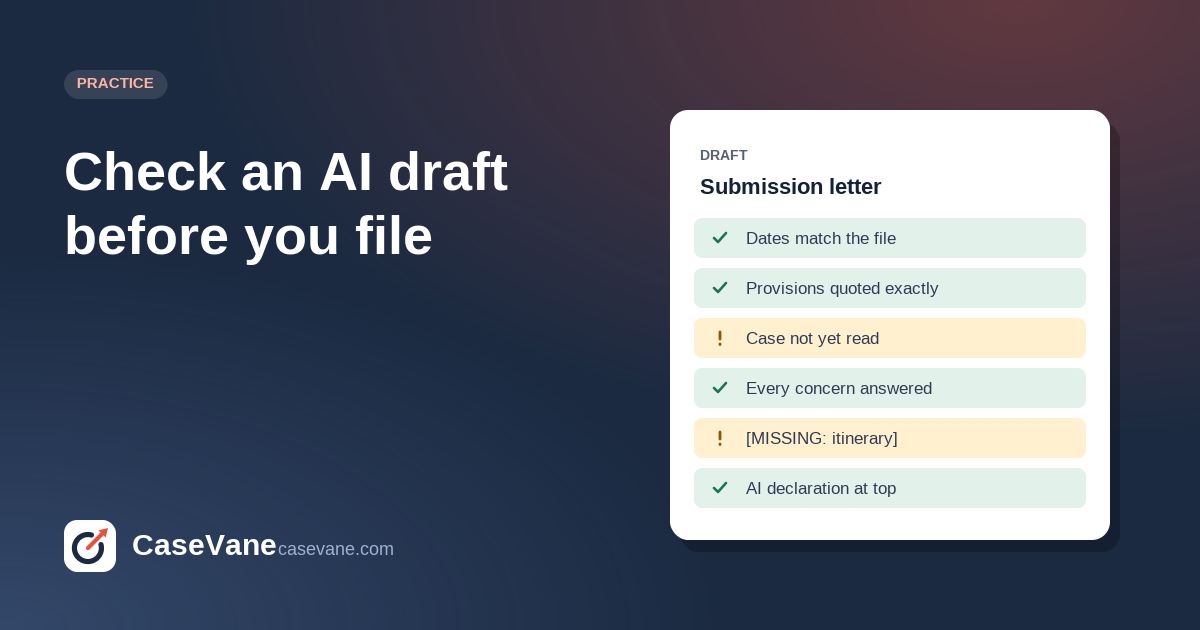
A checklist for checking an AI-drafted immigration submission before you file it
What a licensed professional should verify in any AI-assisted draft: facts against the file, every quotation against the official text, every case citation, and the Federal Court's AI declaration where it applies.