
The question behind most refusals
Most temporary resident visa refusals come down to one finding: the officer is not satisfied that the applicant will leave Canada at the end of the authorized stay. Before drafting anything, it helps to see exactly where that burden comes from and how the officer expressed it.
The provisions
- IRPA s. 20(1)(b). A foreign national seeking to become a temporary resident must establish that they hold the visa or other document required and will leave Canada by the end of the period authorized for their stay.
- IRPR s. 179. An officer shall issue a temporary resident visa if the foreign national establishes the listed conditions, including, at paragraph (b), that they will leave Canada by the end of the period authorized for their stay.
- IRPA s. 22(2). An intention to become a permanent resident does not preclude becoming a temporary resident if the officer is satisfied the person will leave at the end of the authorized period. Dual intent is lawful; it shifts the focus to the evidence of departure.
Read them in the current consolidated Act and Regulations before quoting them; paraphrase is not enough in a submission.
The letter and the notes
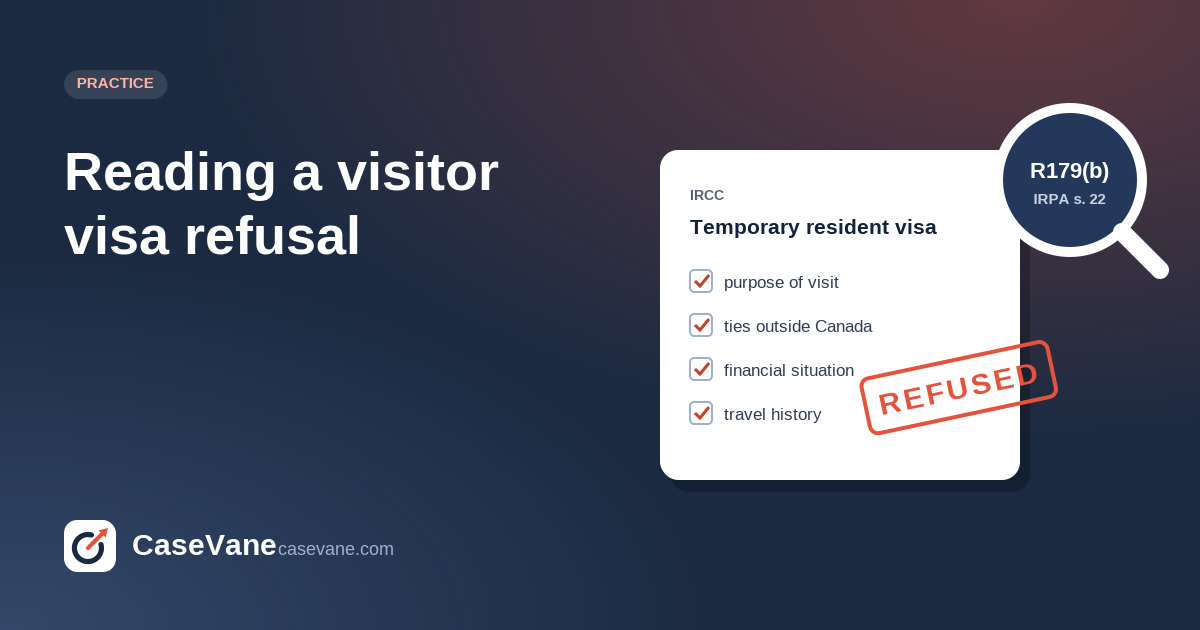
The refusal letter usually lists the grounds as ticked boxes: ties outside Canada, purpose of visit, financial situation, travel history, family ties in Canada. Those boxes say what the officer concluded, not why.
The reasoning is in the officer's notes. IRCC now sends officer's decision notes with many refusals; otherwise the notes in the Global Case Management System can be requested. That is where to look for the analysis you can actually respond to: which documents the officer mentions, which they do not, and whether a stated fact matches the file.
A method for mapping each reason
- List every reason. One line per ticked box and per distinct concern in the notes, quoted exactly.
- Find the evidence on file for each. Employment letters, pay records, property and family documents, bank statements, previous visas, the stated itinerary. Note the document and page.
- Mark the gaps. Where the file truly lacks evidence, say so. A gap is a reason for a new application with better evidence, not something to argue around.
- Check the officer's facts. A misstated amount, a wrong family member, a trip that did not happen: these are the overlooked-evidence points that support a reconsideration request or a judicial review.
- Choose the route. New application, reconsideration request, or leave for judicial review within 15 or 60 days, or more than one of them.
Patterns that recur
- Financial evidence without context. A large recent deposit without an explanation of its source is often read against the applicant.
- Purpose of visit too vague. An itinerary, an invitation and the host's status give the officer something concrete.
- Ties described, not shown. Employment, property, dependants and ongoing obligations need documents, not just statements.
- Notes that do not engage with the evidence. If a key document was submitted and the notes do not address it, that is worth stating precisely.
CaseVane's refusal analysis follows this method: each stated reason, the evidence the file holds on it, the gaps, and options for you to weigh, with IRPA ss. 20 and 22 and IRPR s. 179 added automatically for this type of refusal. See it on a fictional visitor visa refusal.
This article is general information for licensed professionals, not legal advice. Check the current text of the Act, the Regulations and IRCC's instructions before relying on any point.